INSIGHTS / CUMBRIA & LAKE DISTRICT
A Lake District Business Guide to Website Visibility and Direct Enquiries
Connect a Lake District business's visibility with clear information and a dependable enquiry route, using different journeys for visitors, residents and specialist buyers.
Digital Yak · Updated
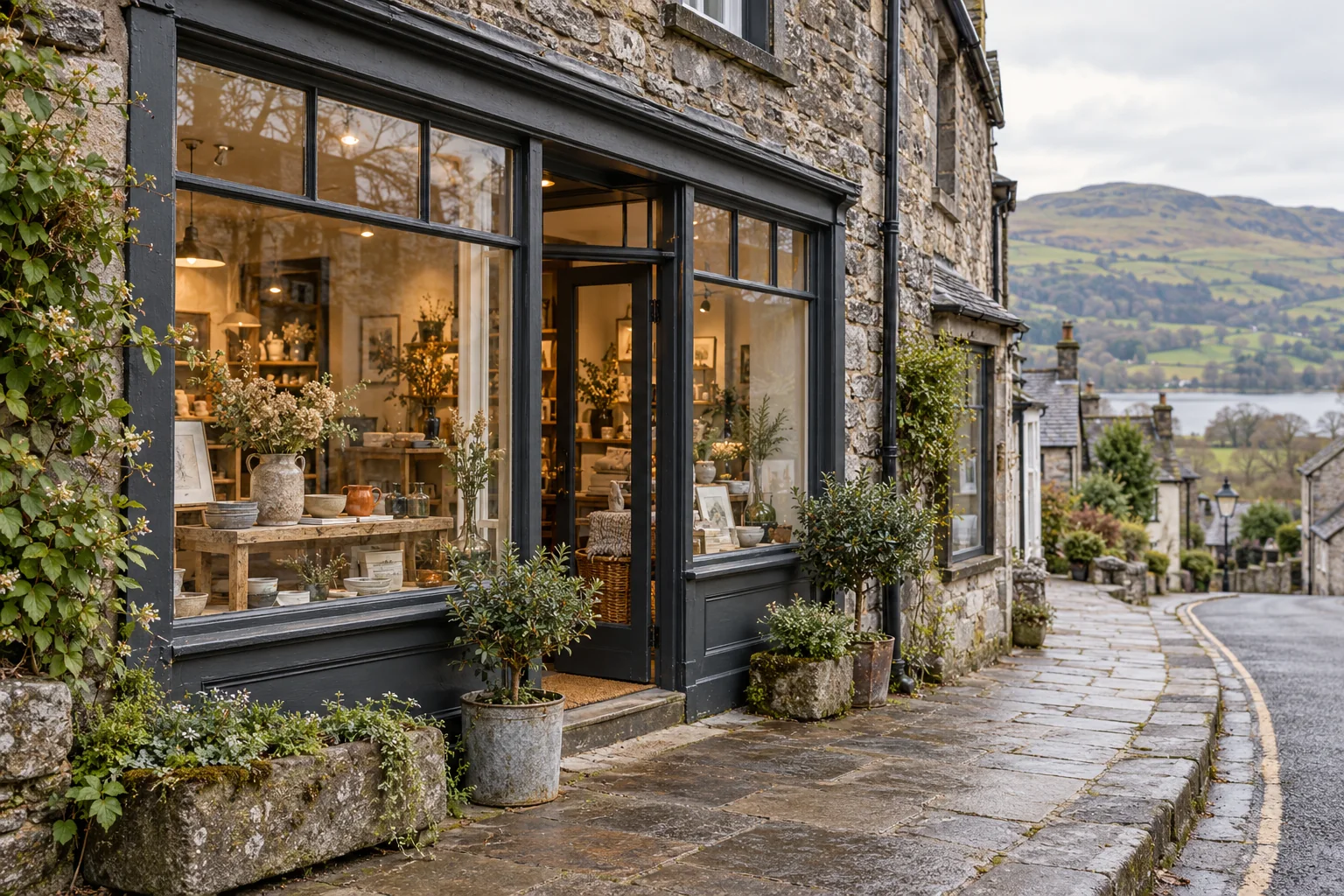
AI-created editorial illustration. Settings, properties and interfaces are fictional.
EXPLORE THE ARTICLE
In this guide
- Define the enquiry the business needs
- Separate audience contexts
- Improve the pages that own the decision
- Show proof the business can substantiate
- Make practical details easy to use
- Connect the enquiry to a response process
- Plan seasonal updates deliberately
- Review useful outcomes
- Test the enquiry as a travelling visitor
Being discovered is only part of a useful business website. The person arriving still needs to understand whether the business fits their needs and how to take the next step. For a Lake District business, the audience may include residents, visitors planning ahead and people already in the area.
The website should connect those different decisions without becoming a collection of generic destination pages. Start with the actual operation and the questions customers ask.
Define the enquiry the business needs
Identify the services, available capacity, real coverage and useful enquiry criteria. An accommodation request, a visitor-attraction booking and a professional-service consultation have different handling needs.
Agree what the website can confirm immediately and what requires a team response. A form that requests availability should not imply a reservation has been secured. A professional enquiry should not promise a particular outcome before assessment.
Write the intended journey as a task: find a suitable service, understand the practical arrangements and contact the correct team. Use that task to assess the site rather than judging only its appearance.
Separate audience contexts
A resident may recognise local place names and need availability or scope. A visitor planning from elsewhere may need a clearer explanation of location, transport and how an experience fits a stay. A specialist buyer may care more about expertise and delivery arrangements than proximity.
Use real enquiry themes to establish these differences. Avoid assuming everyone arriving on a regional phrase is a tourist or that every tourist needs the same information.
For an illustrative exercise, ask what a first-time visitor would need to verify that an activity is suitable for their party. Then compare that list with what a returning local customer needs. Keep common information together and create distinct routes only where the tasks differ.
Improve the pages that own the decision
Service pages should explain the actual offer, scope, evidence and next step. Location information should identify the real place or service area. Destination content should support a specific planning task with verified detail.
Audit existing material before adding more pages. A useful article can often be updated, linked and made easier to find. A new title does not establish a new search intention.
Use the Cumbria local SEO guide to investigate local discovery and topic-cluster planning to organise complementary questions. Keep each resource responsible for a clear task.
Show proof the business can substantiate
Use accurate staff roles, genuine photographs and work examples with appropriate permission. Explain what an example demonstrates. An archived design project can show a delivered interface, but a commercial performance claim needs its own evidence and defined reporting period.
Do not invent a local client story to make the website feel more regional. Specific process information and verified practical details are useful evidence when measured results are unavailable.
For professional services, show how an engagement begins and who is responsible. For hospitality, show representative accommodation and actual facilities. For attractions, explain the experience and the information visitors need before travelling.
Make practical details easy to use
Keep address, contact, opening or availability information readable on a phone. Explain arrival and access accurately. Link to current operators for time-sensitive transport or activity information rather than publishing details nobody maintains.
Provide essential information as text as well as media. A slow-loading video or map should not prevent somebody understanding where to go or how to ask a question.
Test representative tasks with a keyboard and phone. Check menu behaviour, field labels, errors and the final confirmation or success message. The route through an external booking system belongs in that test too.
Connect the enquiry to a response process
Assign a person to receive and handle requests, with cover for absence. Explain a response expectation the business can meet. Keep messages from different routes from becoming disconnected records that nobody owns.
Use proportionate forms and protect the information collected. Marketing preferences should be separate from making the enquiry. Keep personal message content out of analytics and public URLs.
The CRM and lead-tracking guide explains how to connect received requests with qualification and later outcomes without turning the website analytics tool into a customer record system.
Plan seasonal updates deliberately
Use actual demand and booking history to determine when information needs review. Check changes to hours, facilities, capacity and relevant external experiences before promoting a period or event.
Avoid creating a new near-identical annual page when a useful existing resource can be maintained. Use clear dates for genuinely time-limited material and remove misleading availability claims promptly.
Cumbria seasonality provides a regional planning method. The same discipline helps businesses whose demand is linked to local working patterns rather than visitor seasons.
Review useful outcomes
Separate visibility, visits, enquiries and completed business. A rise in destination traffic does not automatically mean more relevant demand. Compare the same enquiry cohorts and keep attribution gaps visible.
Use recurring questions and observed usability problems alongside quantitative evidence. A clearer explanation that prevents an unsuitable enquiry may be a useful improvement even if total submissions fall.
Choose the next action from the evidence: correct information, repair a journey, strengthen proof or create a genuinely missing answer. Explore digital marketing in Cumbria for help connecting those tasks.
Test the enquiry as a travelling visitor
Choose a realistic task and complete it using the information available on a phone. Find the service, check practical arrangements, send an authorised test request and inspect the expected confirmation and receiving-system outcome. Include a mistake or unavailable option so the review covers recovery.
For an illustrative activity enquiry, the visitor may need to know whether a preferred date is a request or a confirmed departure. If the form accepts the date without explaining the distinction, revise the wording and handling process. A visual success message should not imply that availability has been secured.
Record which facts were difficult to find and whether they are current. Arrival, access and contact arrangements deserve the same attention as the headline design. Link to live operator information where another organisation controls the detail.
Use the findings to set a small improvement plan with owners and review dates. The value lies in removing specific uncertainty and verifying the result, rather than assuming every local business needs the same channels or website features.
PUT IDEAS INTO PRACTICE
Explore regional
Connect these ideas with a practical plan for your business.