INSIGHTS / GENERAL MARKETING & WEB
Designing High-Converting Landing Pages for Professional Services
Design professional-services landing pages around buyer uncertainty, relevant evidence and a proportionate enquiry process rather than pressure or generic promises.
Digital Yak · Updated
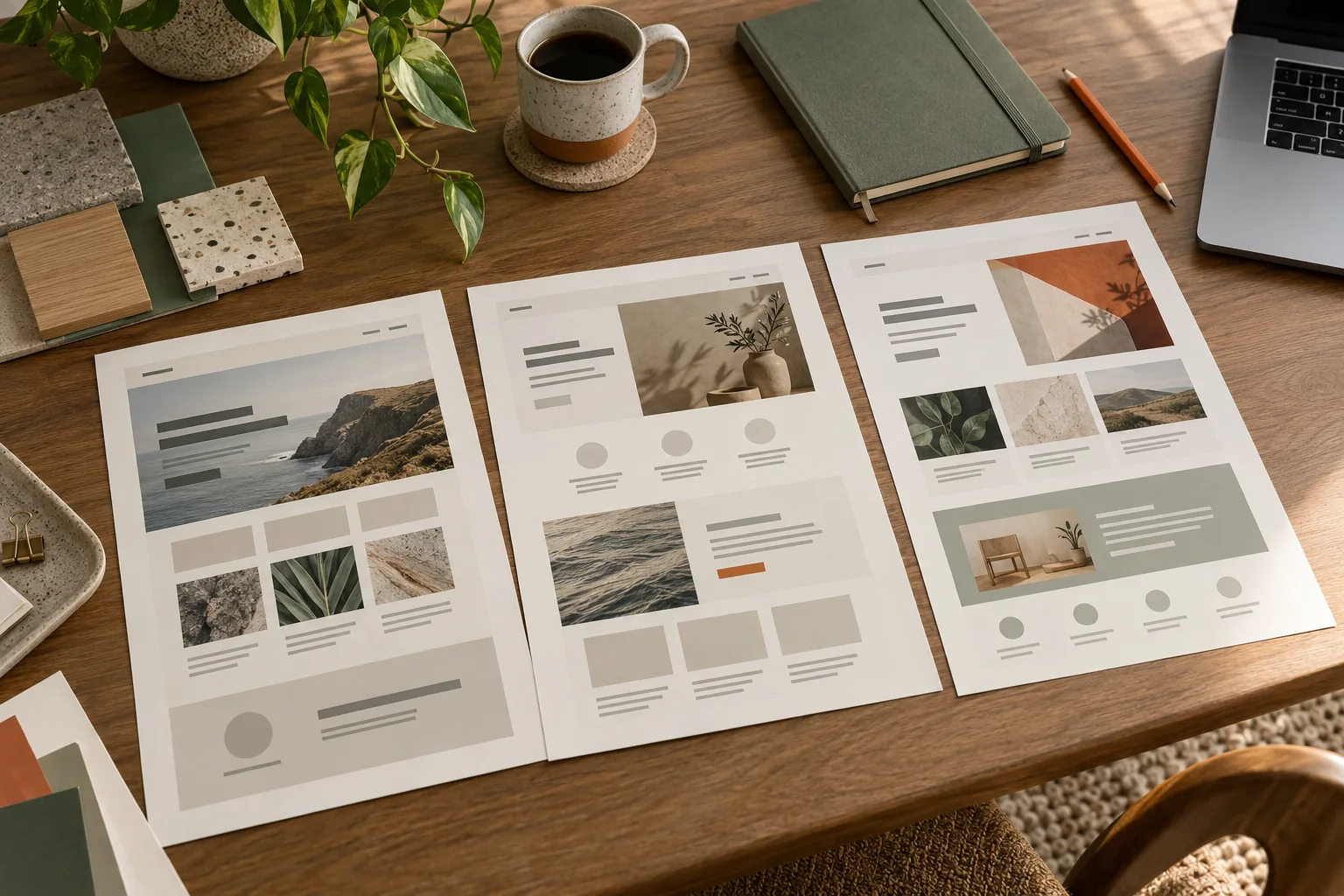
AI-created editorial illustration. Settings, properties and interfaces are fictional.
EXPLORE THE ARTICLE
A professional-services buyer often needs to understand scope, expertise, process and commercial fit before making contact. A landing page should help them assess those questions. More prominent buttons cannot compensate for an unclear service.
Define the buyer and the decision
Record the specific service, audience, trigger and next action. A person seeking an initial discussion needs different information from someone requesting a detailed quotation. Avoid making one page serve every service and stage.
Use actual sales questions and anonymised enquiry themes. Identify uncertainty about responsibilities, timescales, pricing approach and what information is needed. Do not invent customer quotations to fill a persona template.
Explain the scope plainly
State what the service covers, who it is relevant to and how an engagement begins. Describe important exclusions or dependencies where they affect the decision. Use a process explanation that reflects the real business.
For an illustrative rewrite, replace a broad promise to transform results with a clear description of the initial assessment, deliverable and follow-up. The page becomes easier to evaluate without promising an outcome the provider cannot guarantee.
Use relevant proof
Show verified credentials, appropriate examples and case studies that explain the work and evidence. Distinguish a design example from a measured commercial result. Obtain permission for client names, quotations and sensitive information.
The case-study guide provides a proof checklist. Place the evidence near the question it supports rather than collecting unrelated testimonials in one long section.
Make enquiry requirements proportionate
Ask for the information needed for the next step, explain what happens after submission and offer an accessible alternative. Keep marketing preferences separate from the service request.
Use persistent labels, clear errors and a truthful success message. Test delivery and confirmed-success measurement. The lead-form privacy guide addresses data choices, while the conversion-rate guide explains measurement.
Review the journey as a buyer
Ask an unfamiliar reviewer to explain the service, evidence and next step using the page alone. Observe missing information and unclear terms. Test mobile and keyboard use.
Compare qualified enquiries and staff handling effort after changes, acknowledging traffic and timing differences. Explore landing-page design for a page built around the actual buying decision.
Brief the page around one buyer question
Write down what the intended visitor needs to decide, the service scope, the proof available and the next action. Identify what makes an enquiry appropriate. This gives the page a clearer purpose than a general instruction to maximise form submissions.
For an illustrative professional service, the page may need to explain whether an initial call is exploratory, chargeable or part of a formal engagement. Use the actual process and approved wording. Do not let a prominent free consultation claim contradict the firm's terms or capacity.
Ask an unfamiliar reviewer to describe the offer and the consequence of pressing the main button. If their understanding differs from the operation, revise the content or interaction before sending paid traffic. Review image and testimonial implications alongside the text.
Measure received and administratively suitable enquiries as separate outcomes, with privacy and attribution limits recorded. A more explicit scope can reduce unsuitable forms while improving fit. The page should help the right person decide, including a person who concludes that a different service is needed.
PUT IDEAS INTO PRACTICE
Explore web design
Connect these ideas with a practical plan for your business.