INSIGHTS / GENERAL MARKETING & WEB
Choosing a Web Design Agency: Strategy, Questions and Pricing
Choose a web design agency by examining its discovery process, evidence, scope, ownership and testing responsibilities before comparing the price.
Digital Yak · Updated
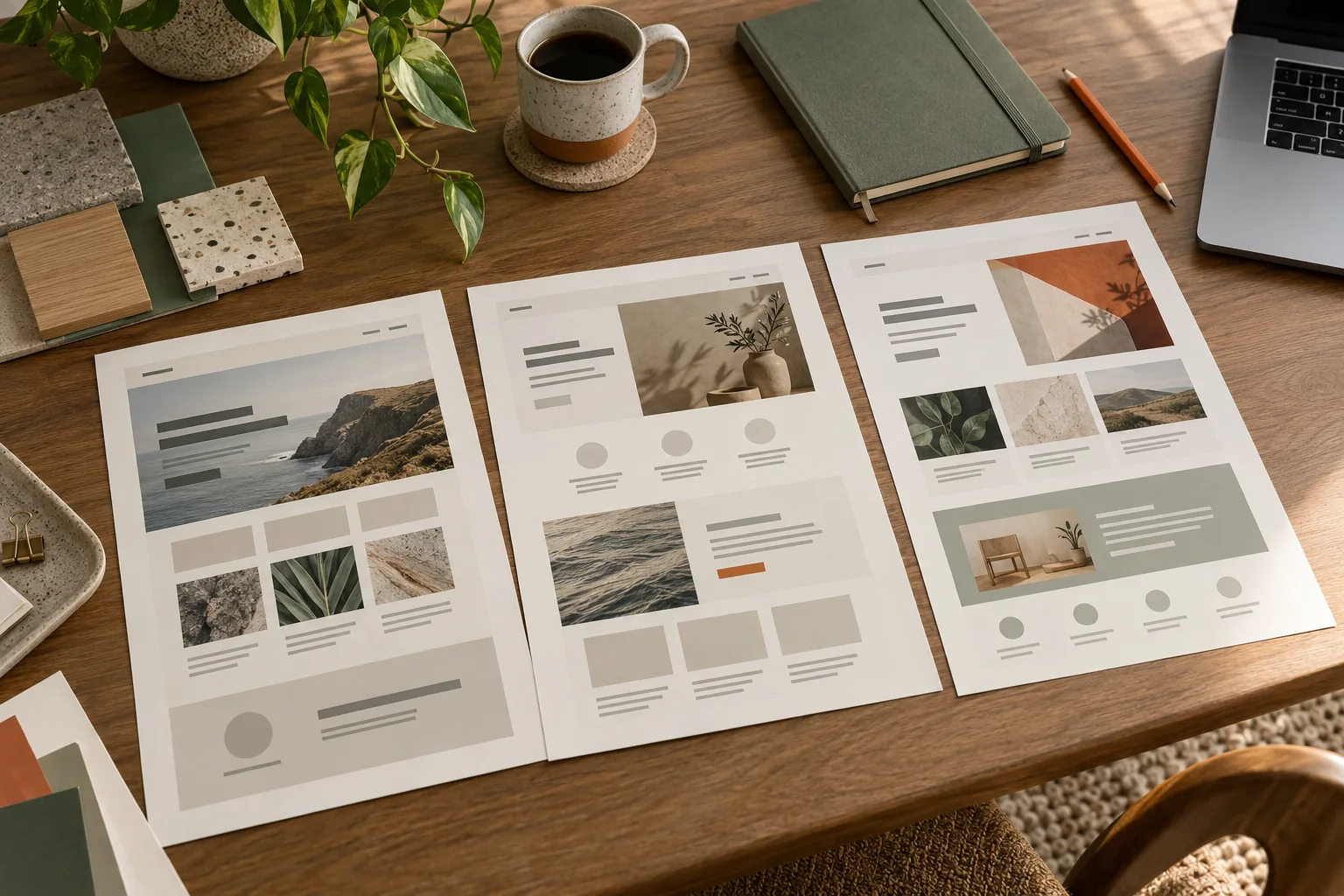
AI-created editorial illustration. Settings, properties and interfaces are fictional.
EXPLORE THE ARTICLE
In this guide
- Start with a usable brief
- Ask how discovery changes the proposed solution
- Examine relevant work carefully
- Compare scope line by line
- Understand what drives price
- Check ownership and maintainability
- Define testing and launch responsibilities
- Choose the working relationship as well as the artefact
- Use an acceptance scenario in agency selection
A website proposal is easier to assess when it explains the problem being solved and the resulting responsibilities. A lower headline price may exclude content, migration, testing or support. A higher price is not evidence of a better fit. Compare the actual work and the way decisions will be made.
Start with a usable brief
Describe the business, the audiences it serves and the tasks the website must support. Identify current problems using evidence: repeated customer questions, failed forms, unclear service pages or difficult booking steps. Distinguish those observations from preferred visual ideas.
Include existing content, integrations, account ownership and any constraints on editing. A redesign of a site with valuable search traffic is a different project from a small new brochure website. The agency needs to understand that difference before estimating.
Write a short list of outcomes and acceptance tasks. For example, an unfamiliar visitor should be able to compare two services, understand the next step and submit a valid enquiry. Those tasks make the eventual work reviewable.
Ask how discovery changes the proposed solution
A useful agency should explain how it will investigate the audience, existing content and technical setup. Ask what evidence could change the initial page plan or design. If the proposal assumes a fixed visual solution before examining the business, clarify the discovery scope.
Agree who supplies decisions and how feedback is consolidated. A project can stall when five reviewers provide contradictory instructions and nobody owns the final judgement. Record responsibilities for content approval, factual verification and sign-off.
Examine relevant work carefully
Look for projects with comparable needs, not just a similar colour palette. Ask which parts the agency delivered, when the work was completed and whether the example remains representative of its current service.
Separate design evidence from commercial results. A screenshot shows an interface, while a claim about enquiry growth needs a defined baseline, period and reliable data. Do not assume a visually impressive archive project proves a particular return. The case-study evidence guide explains what stronger proof looks like.
Compare scope line by line
Check discovery, information architecture, design, content, development, integrations, migration, accessibility work, performance, analytics and launch support. Ask which items are included, optional or dependent on another supplier.
For content, establish whether the agency is migrating supplied text, editing it or writing original copy. For SEO, distinguish technical setup from keyword research, content strategy and ongoing work. Broad phrases such as SEO included need a specific deliverable behind them.
Use an illustrative comparison sheet with the same rows for each proposal. Record the owner and acceptance method as well as the price. This reveals omissions more clearly than comparing the number of pages alone.
Understand what drives price
Complexity can come from content volume, custom interactions, booking or commerce systems, migration requirements and review rounds. Ask for assumptions and the process for handling changes. Clarify applicable taxes, third-party licences, hosting and recurring support costs.
Avoid treating an unsourced price range as a market quote. Obtain current proposals for the actual brief. A template-based site and a complex migration are different scopes even when both are described as a ten-page website.
Agree milestones and payment terms that the business understands. Establish what happens if a dependency is delayed and how work outside the agreed scope is authorised.
Check ownership and maintainability
The business should understand who owns the domain, hosting, accounts, content and relevant licences. Clarify which assets can be transferred and any restrictions in the agreement. Keep account access under the business's control using appropriate permissions.
Ask the agency to demonstrate editing the actual types of content the team will maintain. A promise that everything is editable is less useful than showing a service update, a team change and an image replacement. The platform comparison guide provides questions about ongoing responsibilities.
Define testing and launch responsibilities
Agree the devices, representative pages and end-to-end journeys to be tested. Include forms, email delivery, integrations, redirects and measurement. Accessibility requires more than a single automated score; ask which manual and user checks are included.
Keep a production release checklist and a recovery plan. Establish who can approve launch and who handles an urgent fault. The redesign and migration checklist explains why these are part of the project rather than optional finishing touches.
Choose the working relationship as well as the artefact
Assess whether the agency explains uncertainty clearly, asks useful questions and documents decisions. Check the reporting cadence and how issues will be raised. A good fit supports the business after the first design presentation, when content and implementation choices become more demanding.
Before appointing, confirm the scope, responsibilities, evidence, costs and acceptance method in a form both sides understand. Explore Digital Yak's website design service to discuss the business problem and a practical brief.
Use an acceptance scenario in agency selection
Choose one realistic customer task and ask each shortlisted agency how it would specify, implement and verify it. The task might involve comparing services, sending a request and receiving a usable confirmation. Include an error or third-party handover so the discussion reaches beyond the visual mock-up.
Ask what the client must supply and who owns the unresolved dependencies. A clear answer should address content, data, access, integrations and operational approval. It should not assume that the developer can invent missing business rules during the build.
Then compare how the proposals price the same scope. Identify exclusions, ongoing fees, licensed components and the cost of later changes. A lower initial price may be appropriate, but its maintenance and ownership implications need to be understood.
Keep the acceptance scenario in the eventual project brief. It gives both parties a concrete way to judge whether the delivered website supports the agreed task. Add design and technical criteria as needed, without replacing the customer outcome with a list of tools or fashionable features.
PUT IDEAS INTO PRACTICE
Explore web design
Connect these ideas with a practical plan for your business.