INSIGHTS / TOURISM & HOSPITALITY
Marketing Small Holiday Parks and Glamping Sites
Market a small holiday park or glamping site through accurate unit and pitch information, practical stay planning and a booking route that reflects the real inventory.
Digital Yak · Updated
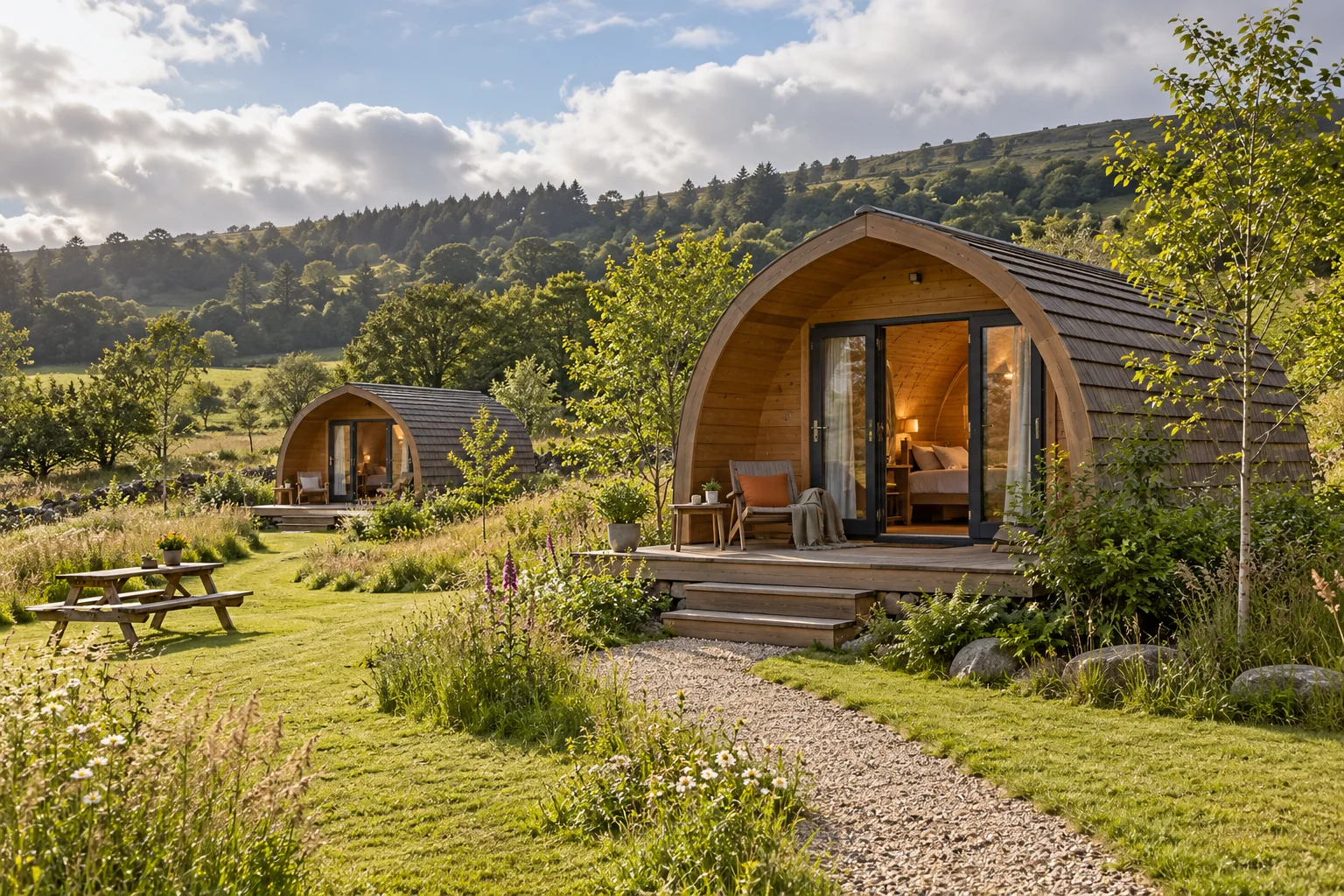
AI-created editorial illustration. Settings, properties and interfaces are fictional.
EXPLORE THE ARTICLE
Holiday parks and glamping sites often offer several accommodation experiences under one name. A guest choosing a touring pitch, a pod or a furnished lodge needs different information. Marketing should make those differences clear before the booking engine asks for a selection.
Map the real inventory
List unit or pitch types, occupancy, sleeping arrangements, included facilities and restrictions. Verify what is private, shared or optional. Explain variations within categories rather than implying every unit has the same features.
Keep the website's names aligned with the booking system. A beautifully described pod is difficult to book if the engine uses an unfamiliar category name and no equivalent details.
Identify suitable stay needs
Use actual enquiries and feedback to understand practical requirements. Families, couples, touring guests and groups may ask different questions. Avoid stereotypes and focus on needs the site can substantiate.
Publish accurate rules about pets, vehicles, quiet periods, minimum stays and facilities where relevant. Material restrictions should be available before checkout, not discovered in a confirmation email.
Show the experience honestly
Use representative photographs of units, pitches, shared facilities and arrival. Label seasonal or category-specific features. Do not use another property's setting or an exceptional unit as an unqualified representation of the whole site.
Explain the surrounding area using verified planning information and a real connection to the stay. The destination-guide method helps keep that content distinctive.
Make booking choices understandable
Test dates, party size, accommodation or pitch selection, extras, total price and confirmation. Explain how guests can raise access or configuration questions the standard flow does not handle.
The holiday-park UX guide goes deeper into pitch-specific decisions. Keep availability and conditions consistent across the website, engine and distribution platforms.
Review the right commercial outcomes
Compare relevant enquiries and reservations by inventory type and stay period. Account for cancellations and operational capacity. More broad tourism traffic may do little for a particular pitch category that needs demand.
Use the site's own booking lead times to plan seasonal content and campaigns. Explore holiday accommodation marketing for help connecting information, acquisition and booking systems.
Test the park's inventory explanation
Choose three materially different accommodation or pitch types and ask an unfamiliar reader to select a suitable one for a stated party and setup. Observe which facts they need and where labels create uncertainty. A memorable unit name may need a plain description beside it.
Verify capacity, bed arrangements, equipment limits, facilities, arrival rules and additional charges with the operations team. For pitches, clarify whether dimensions and electric provision are guaranteed by the selected type or require confirmation. Avoid presenting every area of the park as interchangeable.
For an illustrative glamping unit, explain whether bedding, cooking equipment and bathroom access are included and whether facilities are private or shared. Photograph the actual arrangement rather than using a different premium unit to suggest the standard offer.
Carry the selected unit and party into availability and check the unavailable-date response. Review support questions, unsuitable bookings and changes as well as reservation totals. A clear inventory model supports both marketing and operations; decorative page changes cannot compensate for a booking system that sells the wrong configuration.
PUT IDEAS INTO PRACTICE
Explore marketing strategy
Connect these ideas with a practical plan for your business.