INSIGHTS / TOURISM & HOSPITALITY
Writing Hotel Pages That Turn Browsers into Guests
Write hotel pages that answer a guest's practical decision, using specific property information and clear booking expectations instead of generic hospitality language.
Digital Yak · Updated
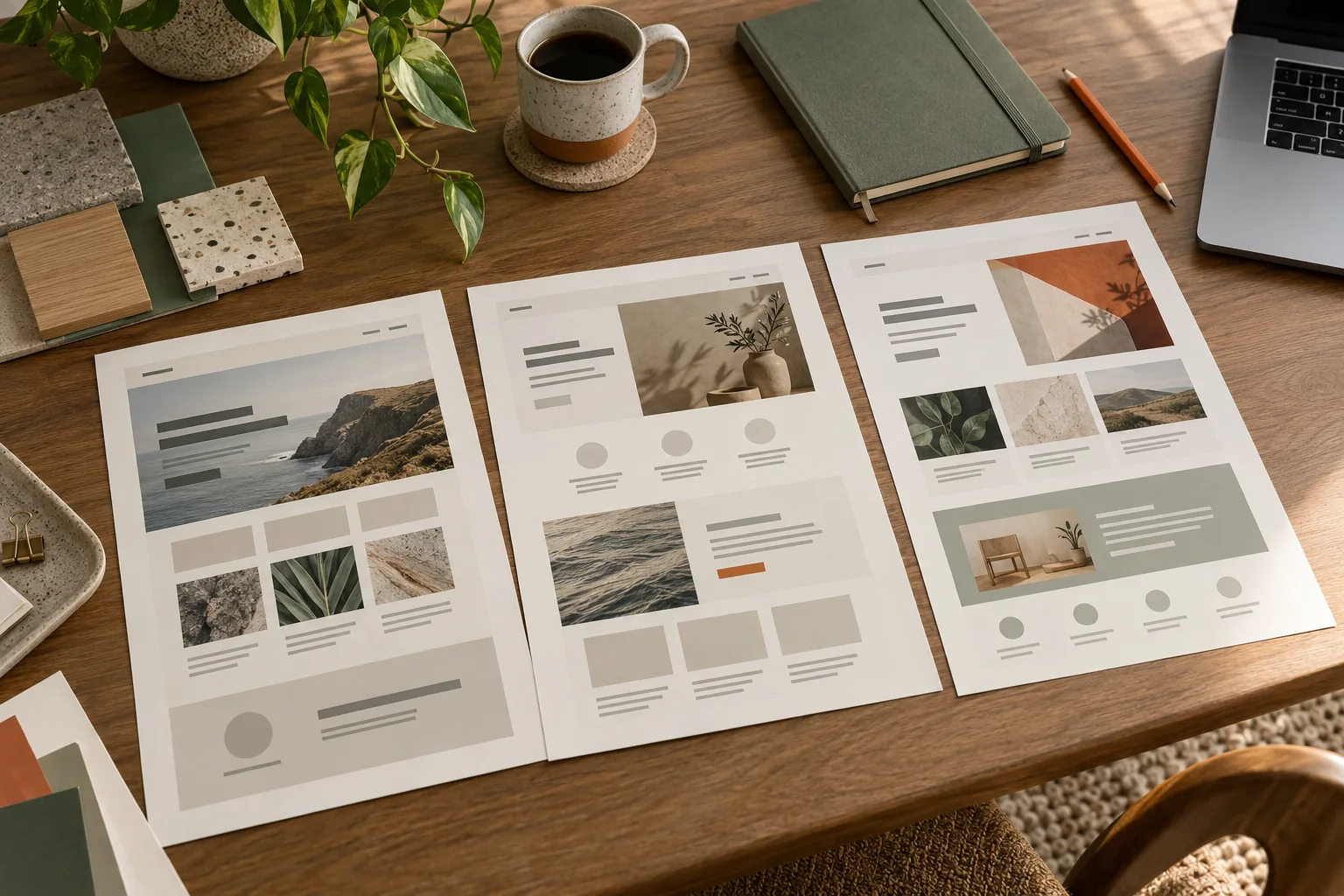
AI-created editorial illustration. Settings, properties and interfaces are fictional.
EXPLORE THE ARTICLE
Hotel copy becomes useful when it helps a person assess a stay. A description of unforgettable comfort can sound attractive while leaving room configuration, meal arrangements and location unclear. Begin with the information the guest needs to compare.
Give each page a job
The homepage introduces the property and routes visitors. Room pages explain accommodation choices. Facility pages describe actual services and restrictions. Destination pages support trip planning. Avoid giving every page the same long property introduction.
Write a one-sentence task for each page before drafting. If two pages have the same task and answer, investigate whether they should be combined or differentiated.
Replace vague claims with checked facts
Ask operations to verify room details, access, parking, meal availability and booking arrangements. Use specific information where it exists. Do not invent a walking time, a panoramic view or a year-round service to make the copy more appealing.
For an illustrative rewrite, replace a broad family-friendly statement with accurate sleeping arrangements, child-related policies and meal information. The facts help the guest decide whether the property meets their needs.
Organise the decision in a readable order
Lead with the main answer, then explain important differences, evidence and conditions. Put relevant charges and restrictions near the information they qualify. Use descriptive headings and links to fuller policies.
Keep language natural. Destination phrases belong where they clarify location, not in every sentence. The hotel keyword guide helps assign search topics without allowing the keyword list to dictate the prose.
Match the call to action to the system
Check availability should lead to a usable availability search. Request a group quotation should explain what information is needed and when the team will reply. Do not suggest an enquiry reserves a room if confirmation is still required.
Provide a clear alternative for questions the booking engine cannot handle. Keep contact details and response expectations current.
Review with an unfamiliar reader
Ask someone to choose a room or plan a stay using the page. Note which facts they cannot find and which claims they misunderstand. Read the mobile version, including the image captions and booking transition.
Use repeated reservation questions to improve the copy over time. Conversion diagnosis helps distinguish an information gap from a technical or availability problem. Explore hospitality website support for help putting the brief into practice.
Turn a vague claim into a checked sentence
Choose three phrases from a hotel page and ask what each helps the guest decide. Replace an unsupported adjective with a fact the team can verify. If a phrase implies a view, quietness, access or inclusion, check the scope before rewriting it.
For an illustrative sentence, a peaceful escape may become a precise description of the property's setting and the rooms available there. Avoid promising silence, uninterrupted views or a fixed travel time unless those claims can be supported. Specificity is useful only when it is accurate.
Then test the reading order with someone unfamiliar with the property. Ask them to explain the room choice, the pricing basis and what the booking button will do. Record uncertainty before explaining the answer verbally; otherwise the review measures the staff explanation rather than the page.
Use the findings to improve the main content, not to create a large FAQ that repeats it. Keep a copy owner and a source for facts likely to change, so persuasive wording remains connected to the current operation.
PUT IDEAS INTO PRACTICE
Explore direct bookings
Connect these ideas with a practical plan for your business.